
Introduction to Specialized Helicopter Piloting
As a helicopter pilot navigating remote and extreme environments, I face unique challenges that demand skills beyond conventional piloting. My regular workplaces are isolated, often hostile terrains, where quick access to help is a luxury I seldom have. This environment requires a robust set of survival skills, equally important as my flying expertise. Preparing for Arctic and Antarctic expeditions, expert mountain guides from Alpine Welten imparted their invaluable experience to equip us for the rigors of the environment.

Estimated reading time: 7 minutes
Beyond Flying Skills

Flying over urban landscapes offers the comfort of quick assistance in emergencies. But in remote or hostile areas, this safety net vanishes. Here, survival training becomes as essential as flying skills, with each mission potentially becoming a test of endurance and resilience.
Underwater Egress and Arctic Challenges

Offshore operations, especially during emergencies like ditching far from shore, come with their own set of challenges, including hypothermia and drowning risks. Preparing for such scenarios involves intense training combining theoretical knowledge with practical drills, such as underwater egress simulators. Arctic expeditions, such as the MOSAiC expedition, presented unique challenges for me, comparable in many ways to those faced in Antarctic expeditions.
Self-Reliance and Survival Skills

Arctic and Antarctic expeditions bring unpredictable challenges, particularly in weather and temperatures. In these conditions, a pilot’s ability to rely on themselves and their training is crucial. Survival skills become as vital as technical knowledge in ensuring safety until rescue. Therefore, pilots must be equipped and trained to survive and save their passengers until rescue arrives.
Mastering Extreme Conditions with “Alpine Welten”

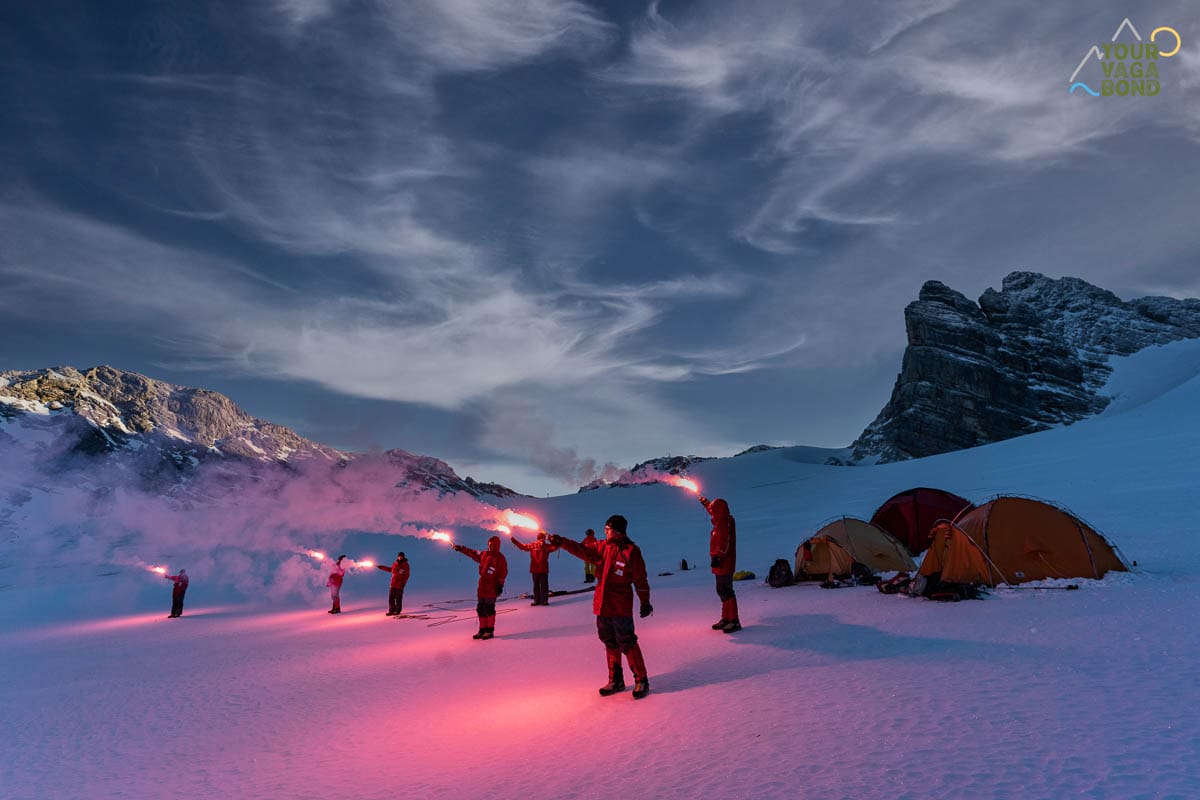
My preparation included an intensive course with “Alpine Welten” to hone these essential survival skills. This training blended theoretical lessons with practical exercises, simulating the harsh conditions of remote environments. We ventured into the Alps, near the Hallstätter Glacier at 2995 meters above sea level, experiencing temperatures as low as minus 18 degrees Celsius and battling strong winds. Here, I learned to conserve energy, stay warm, and manage equipment under challenging conditions. Setting up tents in the biting cold with thick gloves against solid winds was a precious exercise, mirroring the demanding situations of the Arctic.

Battling the Elements: The Critical Importance of Speedy Tent Assembly in Survival Scenarios

For example, when the temperature drops below minus 40° Celcius, finding shelter from the wind is paramount in survival situations. The ability to quickly set up a tent becomes time-critical before the cold renders your fingers immobile. Familiarity with your equipment is crucial, as setting up a tent in dark, icy, and windy conditions demands precision and speed. Knowing how to handle and assemble your gear in such challenging situations can significantly impact survival.

Helicopter Missions in the Arctic

Helicopter operations during the MOSAiC Arctic expedition were confined to a 50-nautical-mile radius around the Polarstern icebreaker. This still-long distance underscored the importance of strict safety protocols and self-reliance in managing emergencies. Given the expedition’s location near the North Pole and its vast distance from civilization, additional rescue resources were unavailable. Any possible emergency must be managed with the resources and personnel available on the ship.
Preparing for the Unthinkable

Despite rigorous training and preparation, the thought of surviving in a tent during the Arctic winter was daunting. The training was not just about physical readiness; it also focused on building mental resilience and preparing for the psychological challenges of extreme conditions.

